
Page Summary:
ISLAMABAD — Pakistan’s possible role in a proposed international force for Gaza has thrust the country’s powerful military leadership into an unusually stark global and domestic spotlight, intertwining Middle East diplomacy with Pakistan’s own contested political order.
The United States is pressing Pakistan to consider contributing troops to a post-war Gaza stabilization force, according to reporting by Reuters, a move that would place Islamabad within the operational architecture of President Donald Trump’s Gaza plan. The proposal comes amid an uncertain ceasefire, with analysts warning that any truce in Gaza remains fragile and vulnerable to collapse. (Reuters, Dec 17, 2025)
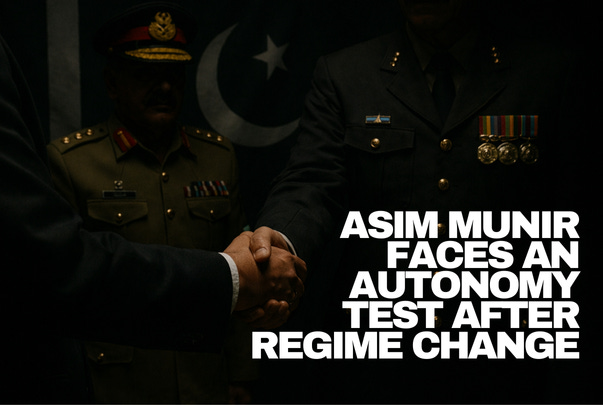
At the centre of this debate stands Army Chief Field Marshal Asim Munir, whose authority at home has expanded dramatically in recent years. Reuters has described Munir as Pakistan’s most powerful military leader in decades with lifetime immunity, following constitutional and legal changes that have consolidated unprecedented control over security policy and internal stability.
But the Gaza proposal raises uncomfortable questions. Hamas has publicly rejected the idea of submitting to any foreign force operating under U.S. or Western political supervision, including frameworks associated with former British prime minister Tony Blair. If Hamas refuses to disarm or cooperate, analysts ask, would Pakistani troops be placed in a position of confrontation with a group Pakistan has historically supported diplomatically as part of the Palestinian cause?
And if the mission’s success depends on coordination with Israel or its allies, another question emerges: would Pakistan’s military find itself indirectly aligned with Israeli forces, a scenario without precedent in Islamabad’s official policy?
Strategic pressure and domestic risk
According to The Times of Israel, U.S. pressure on Pakistan to join the Gaza force is “testing the authority” of Asim Munir at home, where public opinion remains deeply sympathetic to Palestinians and hostile to perceived U.S. or Israeli influence. Any deployment decision could provoke street protests, political backlash, or further strain civil–military relations.
Indian media outlet The Times of India reports that U.S. officials view Pakistan’s participation as politically significant, warning that refusal could irritate Washington at a time when Munir is seeking to manage Pakistan’s economic crisis and external dependencies.
Yet the external pressure contrasts sharply with Western silence on Pakistan’s internal trajectory. Critics argue that while Washington confronts governments like Venezuela over democratic backsliding, it has largely muted its criticism of Pakistan’s political repression, mass arrests, and shrinking civic space.
The London Plan and regime-change allegations
This silence, critics say, is not accidental. It intersects with what Pakistani commentators describe as an advancing “London Plan” — an understanding between the military establishment and the Sharif–Zardari political families to manage power through controlled elections, media management, and legal engineering.
Within this narrative, former Prime Minister Imran Khan’s removal is portrayed as a turning point. Khan has repeatedly stated that his refusal to sign onto the Abraham Accords or to allow U.S. military bases in Pakistan placed him at odds with global strategic interests. Following his ouster, Pakistan witnessed sweeping legal cases against opposition leaders, curbs on media, and expanded military influence over civilian institutions.
In this context, frequent reference is made to the controversial diplomatic cable attributed to U.S. official Donald Lu and addressed to then army chief Qamar Javed Bajwa — a document whose contents are widely cited and which continues to shape public perception of foreign involvement in Pakistan’s political realignment.
Taken together, these developments have reinforced a growing belief among Khan’s supporters that democratic processes and human rights in Pakistan have been subordinated to global power politics.
A convergence of crises
Pakistan’s internal law-and-order situation remains fragile. Political polarization is acute, the economy is under strain, and public trust in institutions is eroding. Against this backdrop, the Gaza question risks becoming more than a foreign policy decision.
Can Pakistan justify sending troops abroad while facing unresolved legitimacy questions at home?
Will Asim Munir’s consolidated power enable strategic decisiveness — or deepen domestic alienation?
And is Western engagement with Pakistan driven by stability and peace, or by transactional silence in exchange for strategic compliance?
As Washington weighs its Gaza options and Islamabad calculates its response, Pakistan appears caught between external expectations and internal fractures, with consequences that may extend far beyond the Middle East.