
Pakistan is entering a period of acute economic fragility. Independent political analysts warn that the government may struggle to meet upcoming IMF repayment obligations as foreign reserves remain thin, fiscal space is exhausted, and structural reforms remain stalled.
Yet the military’s dominant institutional focus is not on recovery or stabilization. Instead, attention is heavily directed toward political engineering: weakening the country’s largest opposition party, PTI; reshaping its leadership; and managing internal fissures through administrative and coercive means. This divergence between economic urgency and political priorities is becoming the defining risk of Pakistan’s near-term trajectory.
IMF Repayments, Fiscal Stress, and Vanishing Reform Capacity
Pakistan’s foreign exchange position remains precarious. The IMF continues to demand wider taxation, governance overhauls, and anti-corruption enforcement—reforms that require political stability and institutional discipline.
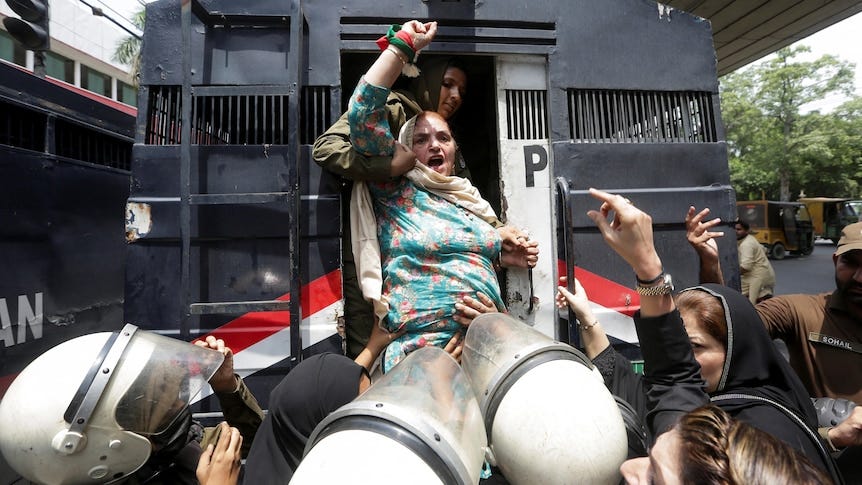
Observers familiar with ongoing discussions note that the state’s limited administrative bandwidth is increasingly consumed by managing protests, litigation, illegal detentions, and internal opposition party divisions rather than implementing the deep structural reforms required for economic rehabilitation. With energy sector losses rising and development budgets sharply curtailed, Pakistan’s fiscal environment is approaching an inflection point where meeting external debt obligations will require extraordinary intervention.
Political Engineering as a Core Institutional Priority
Independent political analysts highlight several recent developments that suggest an intensified state effort to restructure or contain the opposition landscape, drawing parallels with the China-style one-party political model. These developments include the establishment fueling pressure within PTI’s internal decision-making, increasing friction among leadership committees, and creating concerns about senior legal advisers allegedly acting contrary to party cohesion
Analysts further note that a broader environment is being manufactured in Pakistan in which PTI is pushed toward political exclusion, leaving space only for those parties that remain aligned with the establishment’s policies and political objectives.
Additionally, commentators note that coercive tactics—ranging from targeted arrests to information restrictions—continue to shape the political environment. Rather than focusing on economic governance, institutional effort appears directed toward managing political alignments, enforcing discipline within state ranks, and influencing opposition strategy.
Pakistan’s military sentences its former spy chief to 14 years in jail
Pakistan’s recent military court-martial of a former intelligence head resulted in a 14-year prison sentence, marking the first time a former chief of the country’s premiere intelligence agency has been convicted under military law, with the officer retaining the right to appeal the verdict. In contrast, the current army chief—who also serves as the country’s first Chief of Defence Forces (CDF)—has been granted lifetime legal immunity and consolidated command authority through legislative changes, including an extended term and protection from arrest while in office. This juxtaposition highlights a rare moment in Pakistan’s civil-military landscape where one senior security figure faces punitive action while another benefits from enhanced institutional protections.
The Prospect of Relocating the Former Prime Minister and Its Political Implications
Observers tracking detention-related developments have raised concern that the state may consider transferring the imprisoned former prime minister Imran Khan to another facility. Such relocations historically increase administrative control, restrict communication, and reshape political negotiation dynamics.
While such measures fit within a broader political containment strategy, they divert attention from urgent governance requirements. This dynamic reinforces the pattern in which high-stakes political management takes precedence over economic imperatives, deepening uncertainty for both domestic stakeholders and international lenders.
Structural Efforts to Separate PTI From Its Founder
Analysts consistently identify a broader institutional objective: encouraging or pressuring PTI to distance itself from its founder and accept new leadership considered more manageable within current political parameters.
This strategy echoes longstanding patterns in Pakistan’s political history, where opposition parties were reshaped, divided, or reoriented through administrative levers, legal pressure, and coordinated narrative management.
As these efforts intensify, they create a policy vacuum in which structural economic issues remain secondary, unresolved, or unaddressed. Investor confidence, already diminished, weakens further when political priorities supersede fiscal reforms.
Discussions Around Governor Rule and the Administrative Environment
Experts following institutional dynamics report that discussions regarding potential Governor Rule in key provinces have re-emerged. Historically, this tool has been employed to gain administrative control during political turbulence or to suppress opposition mobilization that could challenge federal authority.
Such planning underscores an environment where political stabilization is pursued through control mechanisms rather than institutional reform or consensus building. This approach contributes to governance uncertainty and delays the implementation of economic policies needed to meet IMF benchmarks or to reassure external partners.
Synthesis:Political Engineering Is Undermining Economic Survival
Pakistan’s core economic challenge today is not simply a shortage of foreign reserves or stalled reforms—it is the misalignment between institutional priorities and national economic requirements. The state apparatus has already shifted its focus toward political restructuring, legal containment, and intra-party engineering, sharply diminishing the capacity to execute technical reforms.
This divergence—political engineering at the top, economic destabilization at the base—is producing a systemic risk trajectory. Unless institutional energies shift decisively from political control to economic governance, Pakistan faces a prolonged period of financial volatility, weakened investor confidence, and reduced bargaining power in future IMF negotiations.