
News Summary:
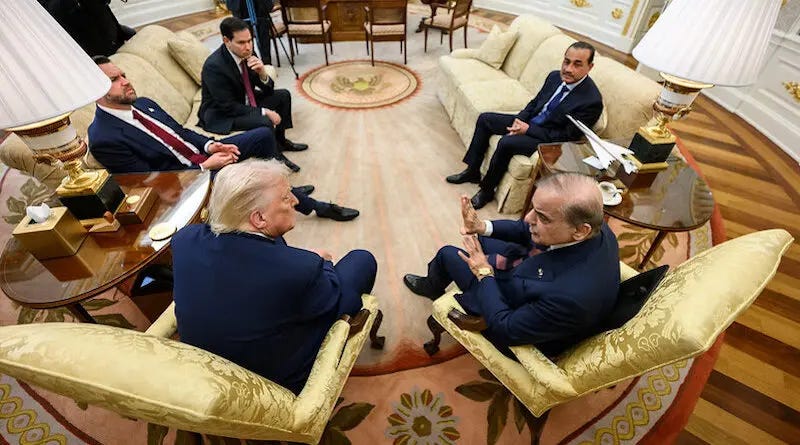
ISLAMABAD/WASHINGTON — Pakistan has indicated its willingness to contribute troops to a proposed international stabilization force for Gaza, according to statements by senior U.S. Secretary of State Marco Rubio, a move that underscores Islamabad’s alignment with a U.S.-backed post-war security framework for the territory.
U.S. Secretary of State Marco Rubio said this week that Pakistan had offered to take part in a multinational force aimed at maintaining security in Gaza following the Israel–Hamas conflict, adding that Washington was reviewing the proposal and working through issues related to mandate, procedures and rules of engagement. Speaking to reporters in Washington, Rubio said: “We’re grateful to those countries, including Pakistan, that have offered troops. We are still working through the framework, including rules of engagement and authorization.”
His remarks followed earlier comments by U.S. President Donald Trump, who said Pakistan’s Prime Minister Shehbaz Sharif and Army Chief Field Marshal Asim Munir had supported his Gaza plan “from the beginning,” comments that appeared to contrast with statements by Pakistani officials that no final decision had been taken.
Neither the Pakistani government nor the military has publicly denied Trump’s statement. Neither the Pakistani government nor the military has publicly denied Trump’s statement. Pakistani ministers have appeared on television offering alternative explanations or broader narratives, but none has directly rejected the claim attributed to the U.S. president. Similarly, the military’s spokesperson, DG ISPR Ahmed Sharif Chaudhry, has held multiple political press conferences criticizing former prime minister Imran Khan and his party, yet has not issued a denial of Trump’s remarks. Some local analysts say Pakistan’s military, supported by allied religious political groups, has sought to reassure a domestic audience broadly sympathetic to the Palestinian cause that Islamabad is not planning to deploy troops to Gaza.
Trump’s Gaza proposal, announced on Nov. 5 2025, outlines a security arrangement involving foreign troops tasked with maintaining order, disarming Hamas and preventing attacks on Israel. The plan does not explicitly reference the establishment of a Palestinian state, a key demand of Hamas and much of the Palestinian leadership.
Hamas rejected core elements of the proposal on Nov. 14 2025, saying it would not agree to disarm or relinquish control of Gaza without a political settlement guaranteeing Palestinian statehood. Public opinion surveys conducted in October showed Hamas retaining significant support in Gaza despite months of conflict.
Despite Hamas’s rejection, the United Nations Security Council passed a U.S.-backed resolution on Nov. 17 2025 authorizing an international stabilization force. Pakistan voted in favour of the resolution, while Russia and China abstained.
Analysts say the proposed force would effectively assume security duties currently carried out by Israeli forces, including border protection and internal policing, while safeguarding reconstruction efforts. Funding for the force is expected to be coordinated by the United States, according to diplomats familiar with the discussions.
Domestic political strain adds complexity to Pakistan’s foreign policy choices
The developments come against a backdrop of heightened political tension in Pakistan, where former Prime Minister Imran Khan remains in custody and several senior figures from his party have recently been handed 10 to 17 years lengthy prison sentences. Khan was removed from office in 2022 following a no-confidence vote, a process his supporters describe as a regime-change operation influenced by foreign pressure.
More:
Power Without Consent: Imran Khan, the Military State, and Pakistan’s Unfinished Crisis
Imran Khan has never been a conventional political actor. Even from prison, he continues to shape Pakistan’s political conversation in ways few leaders before him have managed. More than two years after his removal from office following a military–Sharif–Zardari regime-change operation and his subsequent incarceration, Khan remains physi…

Khan has previously said his government resisted U.S. policy demands, including requests related to military basing and participation in the Abraham Accords. Local analysts say the subsequent political realignment, which brought the current civil–military leadership to power alongside the Sharif-led government, reflected a convergence with U.S. strategic priorities. Human rights organisations have raised concerns over restrictions on political activity, media freedoms, and access to legal processes during the crackdown on opposition figures.
For now, Islamabad has not detailed the scale or terms of any potential troop deployment to Gaza. U.S. officials said discussions were ongoing and no final decision had been made.