
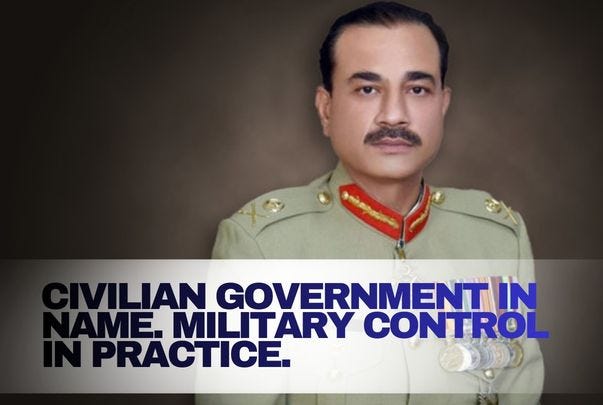
Pakistan’s political instability is often discussed in diplomatic circles as a problem of weak civilian institutions, corruption, or personality-driven politics. Far less candidly acknowledged is the enduring role of the military establishment and its senior leadership in undermining constitutional governance, manipulating civilian authority, and normalizing impunity. The lived experience recorded by Saeed Mehdi—a former senior Pakistani bureaucrat—offers a rare insider account that exposes the structural mechanics of this imbalance.
These are not ideological claims. They are firsthand observations, corroborated by historical outcomes, judicial records, and state behavior.
Moral Courage at the Margins, Complicity at the Center
During Pakistan’s periods of martial law, accountability was selectively weaponized. Saeed Mehdi recounts a martial law inquiry against the Commissioner of Multan. While former subordinates testified against him, two celebrated refused to incriminate him, despite pressure.
This episode highlights a recurring paradox in Pakistan: moral courage has often emerged from society’s margins, while elites—bureaucratic, judicial, and military—have repeatedly failed basic ethical tests.
Judicial Validation of Military Power
After General Pervez Musharraf’s coup in October 1999, Pakistan’s superior judiciary once again legitimized unconstitutional rule. Saeed Mehdi recalls witnessing former Chief Justice Irshad Hasan Khan actively seeking favor with General Mahmood Ahmed, a central figure in the coup.
This same judiciary validated the military takeover and granted the general authority to amend the Constitution—mirroring an earlier precedent when Chief Justice Anwar-ul-Haq legitimized General Zia-ul-Haq’s dictatorship.
For foreign partners advocating rule of law, this pattern matters: Pakistan’s democratic erosion has not occurred through military force alone, but through judicial endorsement of unconstitutional power.
How Zia-ul-Haq Was Chosen—and What It Reveals
Saeed Mehdi’s account of Zulfikar Ali Bhutto’s Multan visit reveals how personal subservience, not merit or institutional process, shaped Pakistan’s most consequential military appointments. Then–Lieutenant General Zia-ul-Haq waited hours into the night for Bhutto without complaint, famously stating he had been ordered to come, not to leave.
Bhutto reportedly concluded from this behavior that Zia was the appropriate choice for Army Chief—a decision that ultimately led to Bhutto’s overthrow and execution.
For external observers, this anecdote illustrates how Pakistan’s military culture rewards obedience upward, not constitutional restraint.
Execution, Hypocrisy, and Institutional Deceit
On the day Bhutto was executed, General Zia-ul-Haq publicly expressed personal sorrow while privately ensuring the sentence was carried out. The performance of piety—offering prayers after confirming the execution—stands in stark contrast to the irreversible act itself.
Bhutto’s refusal to seek mercy, documented by Saeed Mehdi, further underscores the moral asymmetry between an elected leader and the general who presided over his death while claiming helplessness before the courts he controlled.
Kargil: Strategic Recklessness Without Civilian Consent
Perhaps most relevant to international policymakers is the account of the 1999 Kargil conflict. According to Saeed Mehdi, Prime Minister Nawaz Sharif was not informed of the operation. Neither were most Corps Commanders, nor the Navy and Air Force chiefs.
India’s Prime Minister Atal Bihari Vajpayee informed Sharif of the operation—an extraordinary reversal of civil-military norms. Subsequent briefings by General Musharraf reportedly avoided the most basic legal question: who authorized the operation?
When the conflict spiraled, Nawaz Sharif sought U.S. intervention, meeting President Bill Clinton on July 4, 1999. A ceasefire followed, restoring previous positions. Instead of accountability, the military establishment propagated a narrative blaming civilians for a failure rooted in unauthorized military adventurism.
This episode is not merely historical. It demonstrates how nuclear-armed escalation decisions were taken outside civilian oversight—a fact with direct relevance to international security stakeholders.
Saeed Mehdi argues that Musharraf should have been removed immediately after Kargil. That window passed. By October 12, the general had consolidated power. Shakespeare’s warning about missed tides applies here: delayed civilian action enabled another decade of military dominance.
The Structural Reality Facing Pakistan Today
This is not ancient history, nor a closed chapter. Under General Asim Munir and the current military establishment, the same institutional patterns have intensified—military dominance over civilian decision-making, judicial accommodation following the 26th and 27th constitutional amendments, narrative control, and the systematic marginalization of democratic accountability. These dynamics are most visible in the political engineering directed against Pakistan Tehreek-e-Insaf and the continued incarceration and political exclusion of Imran Khan.
Pakistan’s founder, Muhammad Ali Jinnah, envisioned a constitutional, civilian-led state governed by the rule of law. The repeated subversion of that vision—now reinforced through constitutional manipulation and coercive state power—has produced chronic instability that no amount of security cooperation or financial assistance can resolve.