

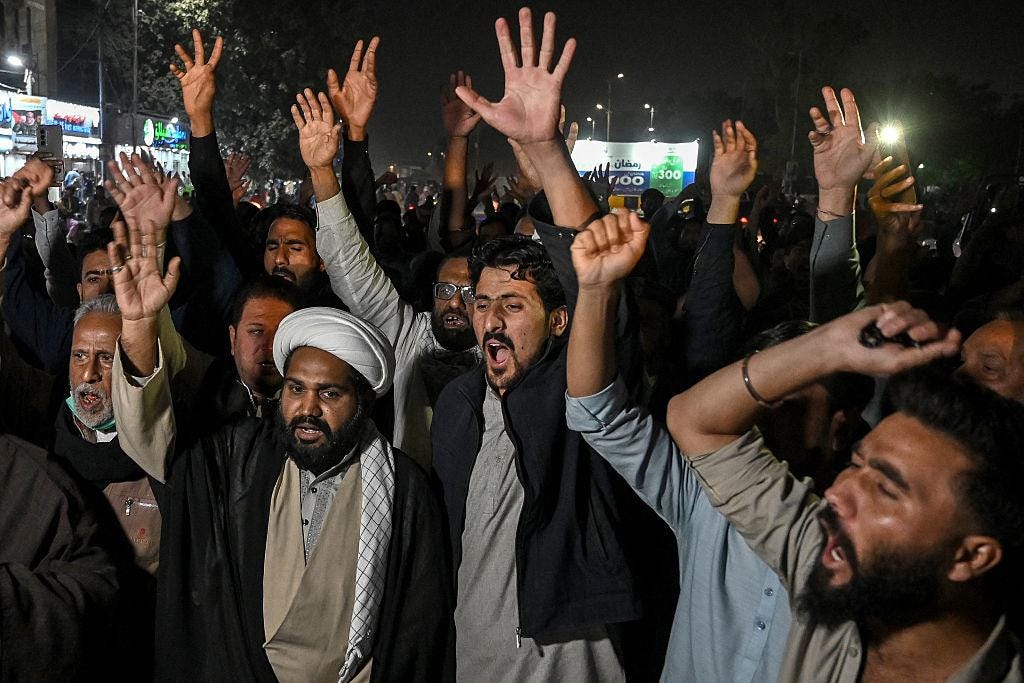
ISLAMABAD — Protests spread across parts of Pakistan on Thursday after lawyers for jailed former prime minister Imran Khan told the Supreme Court that he has lost approximately 85% of vision in his right eye while in custody, raising concerns about access to medical care and due process.
Khan, 73, has been imprisoned since August 2023 and is serving a 14-year sentence in a corruption case. He denies wrongdoing and says dozens of cases against him were politically motivated to sideline him from politics. The military has denied interference in political affairs.
In a report submitted to the Supreme Court following a court-ordered meeting with Khan, his lawyer Salman Safdar stated that the former premier has been experiencing persistent blurred and hazy vision since October 2025. According to the submission, jail authorities allegedly failed to act in a timely manner.
“He has been left with only 15% vision in his right eye,” Safdar said in the report, seen by Reuters.
The Supreme Court had set a February 16 deadline for authorities to allow Khan access to his personal physician for evaluation. Khan was taken earlier this month for what Information Minister Attaullah Tarar described as a 20-minute eye treatment procedure.
The government has not confirmed the extent of the vision loss but maintains that appropriate medical care has been provided.
Dispute Over Written Court Order
Lawyers and family members of Khan say that although the Supreme Court directed that medical access be facilitated, Chief Justice of Pakistan Yahya Afridi did not issue a written order specifying transfer to a hospital of Khan’s choice.
According to statements attributed to family representatives, they waited on Thursday and Friday for a written directive authorizing transfer to a private medical facility and access to his long-term physicians. They say no formal written order was provided.
The Supreme Court has not publicly responded to these claims.
Legal experts note that written orders are typically required to ensure enforceability and institutional compliance, particularly in high-profile detention cases.
Protests and Police Response
Demonstrations were reported in Islamabad’s Red Zone, including near Parliament Lodges and Khyber Pakhtunkhwa House, where opposition lawmakers staged sit-ins. Protesters also gathered at Swabi Interchange in Khyber Pakhtunkhwa province, while smaller road blockades were reported in Dera Ismail Khan and parts of Punjab.
Police reportedly restricted movement in certain areas and made limited arrests. Provincial authorities have not released comprehensive figures.
Pakistan Tehreek-e-Insaf (PTI), Khan’s party, called for transparent implementation of the court’s directives and “unrestricted access to qualified specialists of his choice.”
The party, which emerged as the single largest bloc in the 2024 general election but alleges widespread rigging, says its leader’s medical condition underscores broader political victimization. The government and coalition partners deny those allegations.
Human Rights Concerns
The case raises questions under international human rights law, particularly regarding:
Access to adequate medical care for detainees
Judicial transparency and enforceability of court directives
Freedom of peaceful assembly amid protest restrictions
Under the International Covenant on Civil and Political Rights (ICCPR), to which Pakistan is a party, detainees must be treated with humanity and dignity and provided appropriate medical care.
Rights groups say independent medical evaluation and transparent judicial documentation are critical safeguards in politically sensitive detention cases.
Broader Political Context
Khan’s arrest in May 2023 triggered nationwide protests against the military establishment. A subsequent crackdown targeted PTI leaders and supporters.
With new protests underway, analysts say the scale of mobilization — particularly in Punjab, Pakistan’s most populous province — may determine whether the situation escalates into a broader political confrontation.
For now, the dispute centers on one key question: whether the former prime minister will receive independent medical assessment under a clear, written judicial order.