

Pakistan’s economic indicators paint a grim picture of a state on the verge of financial collapse. After Imran Khan regime change and over the past two years, the country has faced a near-death experience financially: by June 2023, its central bank reserves had plummeted to less than $4 billion – barely two weeks’ worth of import cover – against external debt payments of around $30 billion coming due atlanticcouncil.org. Inflation surged to record highs, reaching 38% in May 2023, the highest in decades and a 58-year peak. This price explosion – coupled with a sharp currency devaluation (the Pakistani rupee lost over half its value in two years) – crushed purchasing power for ordinary Pakistanis. Economic growth flatlined, with GDP actually contracting around 0.2% in 2023. Meanwhile, interest payments on massive public debt have consumed nearly two-thirds of government revenue, squeezing out funds for essential services.
Key economic red flags include:
External Debt and Debt Servicing: Pakistan’s external debt hovers above $130 billion, creating a repayment burden that vastly exceeds its resources indiatribune.com. In mid-2023 the country narrowly avoided default, scraping through with an emergency IMF deal aljazeera.com. Even after temporary relief, the nation faces a “wall” of debt servicing obligations (nearly $80 billion due over 2023-2026) that it simply cannot meet without new loans or rollovers defence.pk.
Foreign Exchange Reserves: Hard currency reserves hit rock bottom in early 2023 (just over $3 billion in February 2023 aljazeera.com), forcing authorities to restrict imports to conserve dollars. Emergency bailouts since then have lifted reserves to around $16–19 billion by late 2025, but much of this improvement is owed to borrowed money and deferred obligations, not organic economic strength. Even at ~$19 billion, reserves cover barely 1.5 months of imports – a precarious buffer for a country of 241 million people.
Inflation and Currency: Consumer price inflation averaged close to 30% in FY2023 and remained 23.4% in FY2024 arabnews.com, punishing households and businesses. Only in late 2024 did inflation briefly dip to single digits (about 4% year-on-year) after aggressive stabilization measures. The currency’s collapse (falling past 285 PKR per US$ by 2025) has made essentials costlier for a population where nearly 40% live in multidimensional poverty.
Socioeconomic Strains: Unemployment is rising (officially around 8% in Nov 2025, though likely higher in reality) even as the labor force grows. Growth stagnation means incomes aren’t keeping up with surging prices, fueling public discontent. Pakistan’s development indicators have deteriorated relative to its peers – by 2023 its per capita income was only half that of India or Bangladesh, despite being higher a few decades ago atlanticcouncil.org. The country’s standard of living has steeply fallen behind the rest of South Asia, reflecting years of underinvestment in human capital and infrastructure.
In short, every vital sign of the economy – from inflation to reserves to debt sustainability – is flashing red. The state has been kept on life support by emergency infusions of cash, but bankruptcy is knocking at the door. The data underscores that Pakistan’s crisis is not just cyclical; it is structural and deep-rooted.
Political-Economic Mismanagement: Military Influence and Elite Capture
Behind the dismal numbers lies a tale of chronic misgovernance and a power structure that has proven resistant to reform. Observers point to entrenched elite capture, structural inefficiencies, and the outsized role of the military in Pakistan’s economic decision-making as core reasons the country perpetually teeters on the brink. Decades of policy mistakes – from keeping an overvalued exchange rate that stifled exports to running persistent fiscal deficits – have created a boom-bust cycle largely untouched by genuine reform.
A striking illustration is the establishment of the Special Investment Facilitation Council (SIFC) in June 2023. This unique hybrid body brought Pakistan’s powerful Army leadership directly into economic governance, ostensibly to fast-track foreign investment and cut through bureaucratic red tape. Co-chaired by the Army Chief and Prime Minister, the SIFC was sold as a “single window” to revive the economy by attracting Gulf Arab and Chinese capital into key sectors like energy, minerals, agriculture, and IT. The military’s involvement was meant to signal stability and discipline in a country infamous for policy U-turns
Two years on, however, the results of this experiment are meager. The SIFC touted eye-popping investment pledges – e.g. $50 billion from Saudi Arabia and the UAE over five years, $10 billion from China, $3 billion from Qatar, among others pewpakistan.com. Yet as of late 2025, those remain largely promises on paper. Actual foreign direct investment (FDI) has only inched up from an abysmal base – Pakistan received about $1.9 billion in FDI in FY2023-24, up only slightly from $1.6 billion the year prior. Officials admit roughly $2 billion in investment has materialized under SIFC auspices in two years, a far cry from the tens of billions in MoUs (memoranda of understanding) signed. In fact, Pakistan’s FDI inflows remain anemic by regional standards – for comparison, much smaller Vietnam drew over $25 billion in FDI in 2024, and even crisis-hit Bangladesh attracted $1.3 billion, nearly on par with Pakistan pewpakistan.com. In short, the SIFC has barely moved the needle on investor confidence so far.
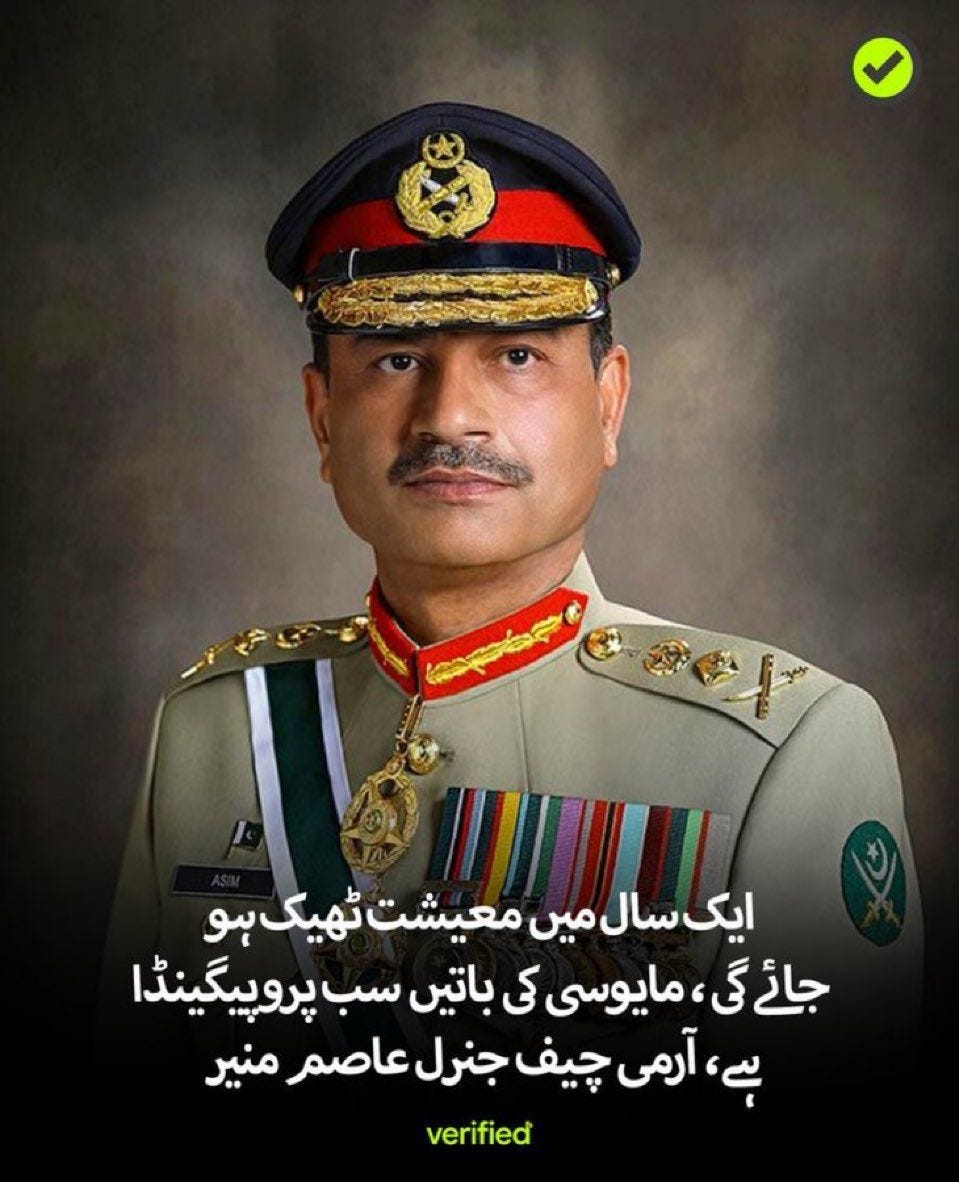
Crucially, the military-led nature of the council may itself be part of the problem. While the army’s clout did help push through a few quick deals (for example, leasing Karachi port terminals to a UAE company within days of SIFC’s launch), it has also raised governance concerns. The International Monetary Fund has flagged the opaque structure of the SIFC – questioning how decisions are made and who is accountable – calling its operations “not transparent”moneycontrol.com. Since the SIFC was created via special ordinance and bypassed Parliament, critics argue it lacks constitutional legitimacy and sidesteps civilian institutions like the Board of Investment. Even some investors are wary: heavy military involvement, far from reassuring, deters foreign firms already nervous about Pakistan’s political instability and unpredictable regulations An IMF-linked analyst warned this parallel power structure could “lead to disaster” if no one takes responsibility for risky policies enacted under pressure.
More broadly, Pakistan’s power elite – whether uniformed or civilian – have chronically failed to implement tough reforms. Corruption and patronage pervade the system. A recent IMF report highlighted that entrenched graft and “elite capture” (benefiting a narrow ruling class) siphon an estimated 6% of GDP, distorting markets and hollowing out institutions aljazeera.com. For decades, IMF programs have prescribed the same remedies – broaden the tax base, cut wasteful subsidies, reduce deficit financing, improve transparency – only to see successive governments pay lip service and then backtrack. Pakistan’s tax-to-GDP ratio remains stuck around 9%, among the lowest in Asia, because wealthy landowners, industrialists and military-run conglomerates exploit loopholes to avoid taxes. The burden of austerity instead falls on the middle class and poor through indirect taxes and sky-high inflation. As one analyst noted, foreign capital is not charity – without competitive fundamentals (from ease of doing business to political stability), grand councils like the SIFC cannot compensate. Unfortunately, the shallow political will to uproot the status quo means Pakistan keeps sliding back after every short-term “fix.”
Desperate Measures: Fire-Sale of National Assets
Facing a cash crunch, the government – with the military’s blessing – has resorted to selling off strategic national assets at bargain prices to scrape together dollars. It’s a fire-sale mode of survival that observers say erodes Pakistan’s economic sovereignty. “One week the finance minister is in Washington lobbying the IMF for funds; the next, he’s in Riyadh or Abu Dhabi pitching the sale of Pakistan’s national assets – from the airline to airports and power plants”. In effect, Pakistan’s finance chief has become a “broker of desperation, auctioning off what remains of Pakistan’s economic sovereignty”.
Recent deals underscore this desperation. In mid-2023, Islamabad quietly leased a significant portion of Karachi’s port operations to a UAE state-owned firm for 25–50 years. The Abu Dhabi Ports Group was granted control of four berths (out of the port’s 33) along with rights to invest in expanding the terminal. Pakistan, in return, received a mere $50 million upfront and a share of cargo handling fees ($18 per container). Even Pakistan’s own officials admit “it’s not the best-negotiated deal” – no independent valuation was done to ensure a fair price, a required step that was skipped in haste. Analysts say the government was more interested in appeasing the UAE for future loans than in maximizing value. As one commentator asked: why would foreign patrons bother stabilizing Pakistan if they can simply pick up prized assets on the cheap?
Similar arrangements are being pursued with other Gulf states. Talks have been underway for Qatar to take over operations of major airports in Karachi, Lahore, and Islamabad. Pakistan is also preparing to offload stakes in loss-making state enterprises – from the national carrier PIA to steel mills and energy companies. However, these too are difficult sells: many of these entities are bloated with political patronage hires and mired in debt. Any serious buyer would demand painful restructuring (like mass layoffs), something successive governments have balked at. Still, the pressure to privatize is mounting. Economists argue that one-off leasing of ports or airports brings only small change; Pakistan needs to outright privatize or liquidate dozens of its 168 state-owned enterprises to raise significant capital and stop the bleeding. This is precisely the kind of austerity playbook the IMF often pushes on indebted nations. Lately, the government has signaled readiness to sell key infrastructure to Gulf countries to pay down debts, even as nationalists decry the “sell-out” of sovereignty.
Another controversial initiative is the leasing of agricultural land and resources. Under the Army-backed Green Pakistan Initiative (an offshoot of SIFC), nearly 5 million acres of state land have been identified for corporate farming with foreign partners par.com.pk. In 2024, for example, a Saudi firm was allocated over 2,000 hectares in Punjab to grow alfalfa for export as cattle feed pewpakistan.com. Tens of thousands of additional hectares are being offered to Gulf investors for large-scale farming and livestock projects. While this may bring in some investment, critics note Pakistan is effectively selling its fertile land and water resources at marked-down rates to richer nations, with uncertain benefits for local communities. Such moves, done under a cloak of urgency, underscore how close to the edge Pakistan has come – the state is willing to trade long-term assets for short-term cash infusions.
IMF Lifelines and Increasing Friction with Lenders
Austerity Measures and Burden on Ordinary Pakistanis
Pakistan’s chronic balance-of-payments crises have made it a perennial client of the International Monetary Fund. The country is now in its 25th IMF bailout program since 1958 aljazeera.com – a telling statistic on its own. Each time, Islamabad negotiates a rescue package conditioned on economic reforms; each time, implementation falters once the immediate crisis ebbs. The latest cycle has been no different. The subsequent coalition government under Shehbaz Sharif struggled to meet IMF conditions amid political chaos, until by mid-2023 Pakistan was hours away from default. Only a last-minute $3 billion Stand-By Arrangement (SBA) in July 2023 saved the day, with Pakistan committing to painful belt-tightening and a “return to market-determined exchange rate” policy as demanded by the IMF.
Even after staving off default, tensions with the IMF persist. By late 2024, Pakistan negotiated a new $7 billion, three-year loan program – only to face delays in IMF board approval amid questions about Pakistan’s reform commitment. High-ranking officials began openly accusing the IMF of moving the goalposts or succumbing to “geopolitics” in withholding funds. The frustration on Pakistan’s side is clear: after pushing unpopular measures like new taxes, high interest rates, and utility price hikes, officials expected timely disbursements. Instead, the IMF pressed for more transparency and safeguards – including scrutiny of initiatives like the SIFC and other off-budget funds – before releasing money. For instance, the Fund reportedly demanded that Pakistan abolish a newly created sovereign wealth fund (intended to park and sell state assets) due to concerns it would bypass fiscal controls. Moreover, as part of the current program, the IMF required a detailed audit of Pakistan’s governance and corruption impediments – a report that, when finally published, highlighted systemic issues and ruffled the establishment’s feathersaljazeera.com.
Each bailout has essentially only bought time, not solved the problem. Friendly nations like China, Saudi Arabia, and the UAE have periodically thrown lifelines (from loan rollovers to deferred oil payments), but these too are band-aids. Without fundamental fixes, Pakistan remains stuck in a debtor’s trap – paying off old loans by securing new ones. The IMF itself acknowledges the risk that Pakistan’s debt is on an unsustainable path absent serious fiscal reforms and perhaps debt restructuring (a step authorities dread, fearing it would scare away investors and hurt national pride). The bottom line is that Pakistan’s economy survives on borrowed oxygen. As soon as one IMF program ends, speculation begins about the next. This revolving-door relationship with creditors has fostered resentment: austerity measures mandated by lenders are politically unpopular, yet the alternatives (default and isolation) could be even worse, as seen in Sri Lanka’s recent ordeal.
Rising Poverty and Social Impacts
The social consequences of this austerity were severe. Poverty has climbed notably since the IMF program’s implementation. By 2023, Pakistan’s poverty rate was projected at roughly 37%, up from about 34% the year prior – meaning millions more fell below the poverty line due to inflation and economic stagnation. The cost of food staples spiked (for example, wheat flour prices more than doubled between Aug 2022 and Aug 2023, making even bread unaffordable for many) theguardian.com. Families had to cut back on meals and essentials; one Karachi wage-earner noted his grocery bill had doubled in two years, forcing his household to “cook once and make it last for two days”. With incomes stagnant or lost, household purchasing power eroded sharply, pushing more people into hardship. The IMF itself warned that Pakistan’s “cost-of-living crisis” was jeopardizing millions’ rights to food, health, and an adequate standard of living.
Rs 5,300 Billion “Recovered” — But Not a Penny Reached the State
Amid the economic turmoil, a startling figure made headlines — the allegation that Rs5,300 billion were “lost to corruption” during Shehbaz Sharif’s government. This claim was particularly amplified by opposition figures seeking to portray the outgoing administration as irredeemably corrupt. The origin of this figure stems from a recent IMF “Governance and Corruption Diagnostic” report — a comprehensive 186-page study completed in July 2025 and quietly published a few months later. In the report, the IMF noted that Pakistan’s anti-corruption agencies (especially the National Accountability Bureau, or NAB) had reported Rs5.3 trillion in recoveries of corruption-related assets over the past two years. However, contrary to NAB’s claim, the reality is that not a single penny of this amount was deposited into any government or official account. In other words, during 2023–2024, approximately Rs5.3 trillion in illicit or misappropriated funds were identified and theoretically recovered. The IMF stressed that this staggering sum represents “only a fraction of the true cost” of corruption in Pakistan. To put things in perspective, Rs5.3 trillion is roughly 6% of the country’s GDP, and according to the IMF’s assessment, even more is being siphoned off due to elite capture and weak governance dgipr.kp.gov.pk
Conclusion: A State at the Precipice
Pakistan today presents the portrait of a nation failing economically, if not already failed in the eyes of many analysts. The phrase “bankruptcy is knocking at the door” is no mere alarmism – it reflects a very real possibility should any of the tenuous support holding up the economy give way. The current government and its powerful backers in the army appear to be in frantic survival mode, mortgaging the country’s future for short-term relief. They have slashed development spending to meet IMF budget targets, hiked taxes and utility bills on a beleaguered populace, and courted foreign patrons to sell off Pakistan’s family silver at distress prices. These moves may stave off an immediate collapse, but they do not alter the trajectory of decline. As one senior journalist noted, “it does not even look like we are going to change course.
In a critical assessment, the fundamental issues remain unaddressed: a ruling elite (including feudal politicians, industrial tycoons and military brass) that resists reform of its perks; a chronic inability to live within means, resulting in repeated fiscal blowouts; and a habit of kicking the can down the road with bailout after bailout. Pakistan’s economy has essentially been running on fumes, propped up by external loans and one-off asset sales. Without a drastic change in governance and policy – which so far seems absent – the country risks a deeper crash. The warning signs of state failure are evident in its financial insolvency, but also in the erosion of public services and the rule of law that accompany economic meltdown. In sum, Pakistan stands at the precipice: it can either undertake the difficult path of reform and restructuring (breaking the cycle of elite capture and military-economic meddling), or continue its current descent and face the very real prospect of default and further destitution. The clock is ticking, and bankruptcy’s knock grows louder by the day.