
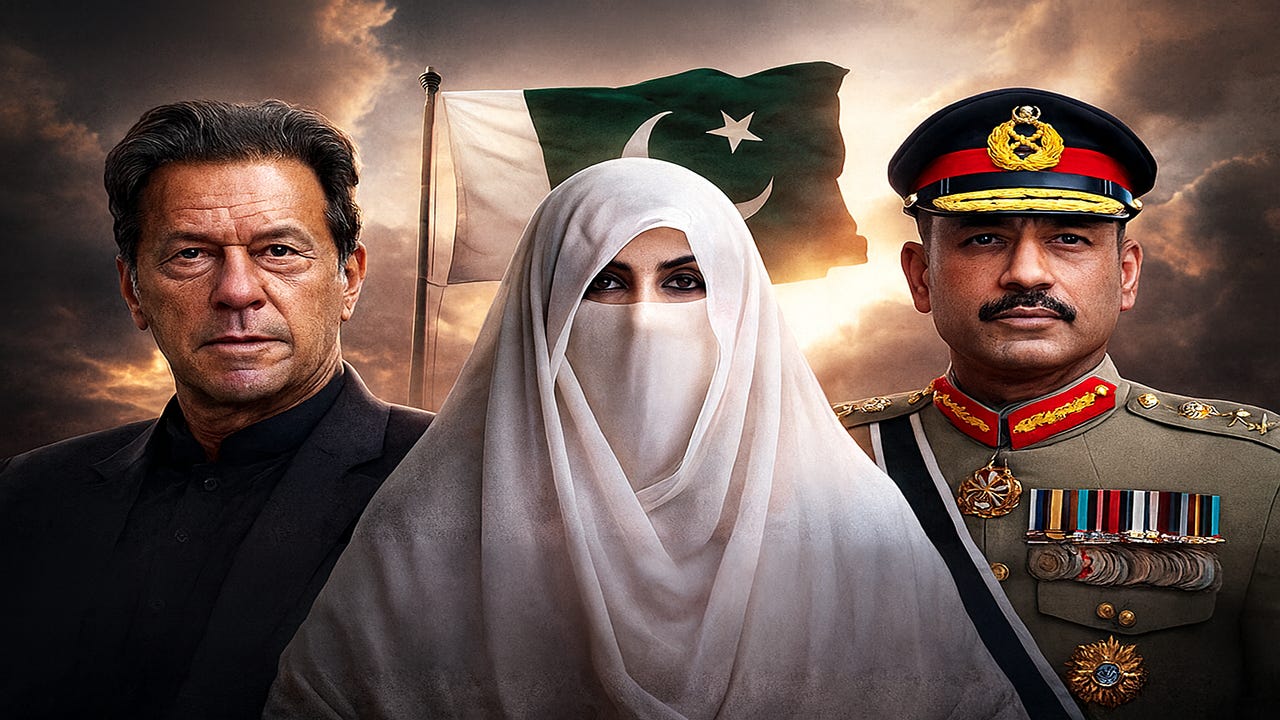
Islamabad — Four years after former prime minister Imran Khan was removed from office, Pakistan remains gripped by political tension, with his party facing sustained legal pressure, widespread arrests and tightening state controls.
Khan’s removal in April 2022 triggered nationwide protests and reshaped the country’s political order. Since then, authorities and the establishment have pursued an extensive crackdown on his party, Pakistan Tehreek-e-Insaf (PTI), targeting senior leaders, workers and supporters through political motivated legal cases and policing measures.
Arrests, Cases and Court Battles
Khan has been convicted in multiple cases, including a high-profile corruption trial, and continues to face further legal challenges linked to unrest in May 2023.
Thousands of PTI supporters have been detained over the past four years. Many were arrested during protests or in pre-emptive operations ahead of political gatherings. In several cases, detainees were booked under multiple charges or linked to previously registered cases.
Civilians accused of involvement in unrest were also tried in military courts — a move that drew legal scrutiny. Appeals in civilian courts have been slowed by delays in obtaining trial records, limiting judicial review.
Restrictions on Political Activity
Pakistan’s establishment has imposed strict constraints on PTI’s political operations.
Party leaders have reported movement restrictions, repeated detentions and the risk of arrest even during private or family events. Protest calls have frequently been met with police action, including raids and preventive arrests of organisers.
These measures have significantly curtailed the party’s ability to mobilise publicly.
Judicial and Institutional Pressures
The period has also been marked by tensions within Pakistan’s judicial system.
Transfers of judges, delays in politically sensitive cases and limited access to legal documentation have raised concerns among legal observers about due process and institutional independence.
At the same time, access to information has narrowed. Requests under transparency laws have often gone unanswered, while new policies have reduced public visibility into government spending.
Media Environment and Information Control
Journalists and political commentators have faced increasing scrutiny, particularly in digital spaces. Content linked to political dissent has been subject to monitoring, while regulatory pressure has shaped media coverage.
Economic Backdrop
Alongside political turmoil, Pakistan’s economic conditions have deteriorated sharply.
Since 2022:
Fuel and electricity prices have risen steeply
The Pakistani rupee has weakened significantly against the US dollar
Inflation has surged, increasing the cost of basic goods
Economic growth has slowed compared to pre-2022 levels
These pressures have compounded public frustration and deepened political divisions.
An Unresolved Political Future
Despite imprisonment and legal setbacks, Khan remains a central figure in Pakistan’s politics.
His party continues to command support, while political uncertainty persists over his future role. Analysts note that any shift in his legal status or political negotiations could have significant implications for the country’s stability.
Four years on, Pakistan’s post-2022 trajectory reflects a country navigating prolonged political confrontation.
With a weakened opposition, ongoing legal battles and economic hardship, the question of how — and when — political normalisation will occur remains unresolved.