

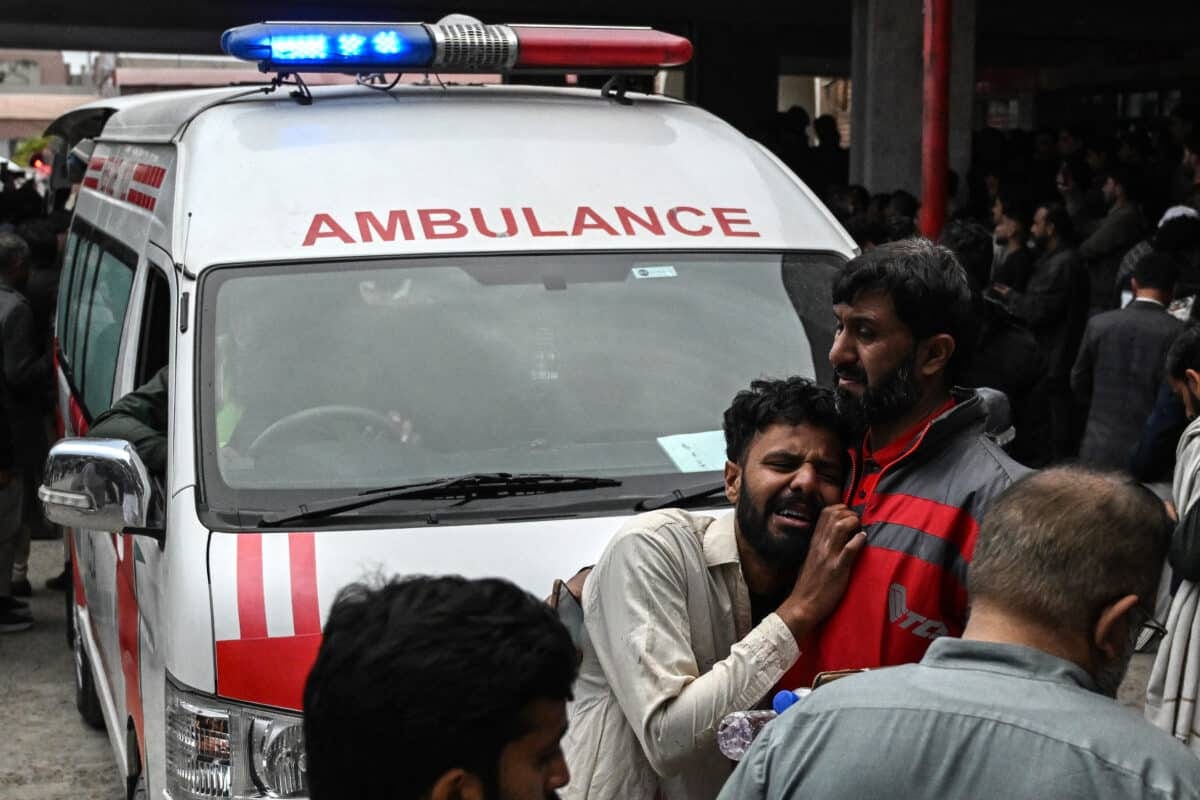
ISLAMABAD — Pakistan’s response to a recent suicide bombing in the capital has drawn mounting criticism from opposition figures, independent journalists, and civil society groups, amid allegations of information suppression, misdirected blame, and official insensitivity during a period of national mourning.
A suicide blast in Islamabad was reported earlier this week. The government initially released an official figure of 33 casualties, but no further updates or detailed breakdowns were provided afterward.
Critics allege that following the release of the initial figure, the government moved to remove the blast from national media coverage, leading to the story rapidly disappearing from television news cycles. The government has not publicly explained the reduction in coverage.
According to accounts circulating on social media, the Deputy Superintendent of Police (DSP), Islamabad, had initially begun sharing updates about the blast on X (formerly Twitter). These posts were later removed, which critics allege occurred under government direction. Authorities have not confirmed or denied this claim.
Several journalists and commentators further allege that the federal government instructed television news channels not to continue broadcasting the blast-related news. The Ministry of Information has not publicly addressed these allegations.
As coverage of the incident faded, questions emerged online about why reports of a major terrorism attack had vanished from Pakistani media, with some users asking whether the state was attempting to shield or downplay the terrorism threat.
Security Failure Dispute
The Minister of State for Interior, Talal Chaudhry, and Information Minister Ata Tarar stated that the incident did not constitute a security failure.
Opposition figures strongly dispute this characterization, arguing that a successful suicide attack reflects failures in intelligence, policing, or preventive security. Instead of acknowledging institutional lapses, critics say the central government responded with what they described as an unserious approach, publicly assigning responsibility for terrorism to the opposition rather than examining agency failures.
Ata Tarar alleged that the resurgence of terrorism was linked to Pakistan Tehreek-e-Insaf (PTI), a claim made without presenting evidence.
Long-Standing Allegations and Public Anger in KP
PTI leaders have for nearly four years alleged that elements within the military establishment facilitated or allowed the resettlement of militant groups inside Pakistan.
However, analysts and local observers note that similar perceptions exist among segments of the public in Khyber Pakhtunkhwa (KP), where renewed militant violence has fueled anger toward the military and successive federal governments led by Pakistan Muslim League (PML-N) and Pakistan Peoples Party (PPP).
Basant Celebrations Amid Mourning
Despite the security incident, Basant celebrations were held in parts of Punjab, including appearances by senior political figures.
Former Prime Minister Nawaz Sharif, who has served three terms, was seen participating in Basant festivities shortly after the Islamabad blast, drawing criticism from sections of the public who said the celebrations were inappropriate while victims were being mourned.
Opposition voices argue that official and semi-official celebrations should have been postponed or suspended as a mark of respect.
Timing, Cost, and Economic Pressure
Basant traditionally marks the arrival of spring, but critics allege the festival was held early, during winter, to divert attention from planned protests on 8 February.
The government is alleged to have spent around $28–29 million on Basant-related events. The figure has not been independently verified, and authorities have not released an official expenditure breakdown.
The criticism comes amid severe economic strain, with Pakistan’s foreign exchange reserves estimated at around $4 billion. Of this, $2 billion provided by the United Arab Emirates has been rolled over for only one month, according to publicly available financial disclosures.
Broader Political Context
Opposition parties and rights advocates argue that civilian authorities operate under strong military influence, claiming that security failures are obscured while political blame is redirected. The government and military leadership deny political interference and maintain that institutions are functioning within constitutional limits.