

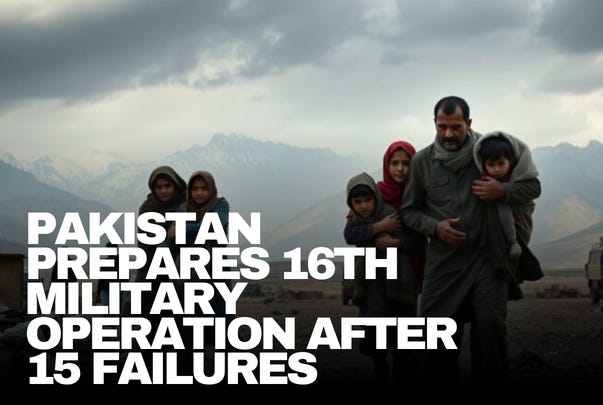
ISLAMABAD/PESHAWAR, Jan 25 — Around 80,000 people have fled Pakistan’s Tirah Valley in the northwest ahead of a Jan. 25 military deadline to clear the area, local officials and residents said, despite federal government denials that any evacuation orders were issued.
The displacement follows preparations for a new security operation in Tirah, part of Khyber district near the Afghan border, an area authorities say is partially under the control of Pakistani Taliban fighters. The valley has an estimated population of about 150,000, or roughly 30,000 to 37,000 households.
Pakistan’s Ministry of Information said in a statement late on Saturday that “no order has been given to evacuate Tirah Valley” and that security agencies were conducting “intelligence-based actions” against militants, adding that civilians were not being affected.
The statement came as videos showing families, including children, leaving snow-covered villages circulated widely on social media, and as international media, including Al Jazeera, reported that thousands of families were being forced to leave ahead of a planned security sweep.
Local officials said residents were asked to leave by Jan. 25 as troops prepared to move into parts of the valley. Many families travelled for days through mountainous terrain amid heavy snowfall, reporting shortages of food, water and shelter.
At least two children died on Jan. 22 when a vehicle carrying displaced families skidded into a ravine during snowstorms, according to local authorities. Residents also reported cases of children falling ill and deaths linked to exposure to extreme cold during the journey.
Each displaced family is receiving around 250,000 Pakistani rupees (about $900) to cover basic needs for two months, officials said.
Khyber Pakhtunkhwa Chief Minister Sohail Afridi said the provincial government had allocated 4 billion rupees on Dec. 26, 2025, for what it described as “anticipated temporary movement” of residents, but stressed that the funds were meant for humanitarian support, not for any military operation.
Afridi said he had never supported the operation and had refused requests to convene a provincial Apex Committee meeting to approve it. “Decisions imposed by the barrel of a gun do not bring peace,” he said in recent remarks, questioning the effectiveness of past military campaigns in the province.
The chief minister said at least 22 military operations had been conducted in Khyber Pakhtunkhwa over the past two decades without delivering lasting stability. He also complained of federal interference in civilian matters, saying delays and checks in the registration process by federal institutions, including NADRA, had caused hardship for displaced families.
Displaced residents described losing livelihoods and facing dangerous conditions. “My shop is gone, my income is gone,” said Saeed Khan, who left Tirah with his family. Another resident, Ihsanullah, said his child died after security restrictions delayed access to medical help.
Tirah has seen repeated cycles of displacement, marking the third major exodus in about 13 years. The area was declared cleared of militants in 2019, but fighters later returned, officials said. Pakistan has conducted more than 22 counterinsurgency operations nationwide since 2001.
The Pakistani Taliban, or TTP, has intensified attacks since 2021, following the Afghan Taliban’s return to power in Kabul. Pakistan accuses Afghanistan of allowing militants to operate from its soil, a charge Kabul denies.
Human rights groups have raised concerns over the timing of the operation during harsh winter conditions. Médecins Sans Frontières said it was providing limited medical support through mobile clinics, while Amnesty International and Pakistan’s Human Rights Commission have called for investigations into the displacement. No United Nations mission has so far announced a formal response.
Leaders of the PTI, including former prime minister Imran Khan and former human rights minister Shireen Mazari, have said that during the tenure of former army chief Gen. Qamar Javed Bajwa, senior military officials discussed or facilitated the resettlement of Pakistani Taliban fighters and their families in parts of Khyber Pakhtunkhwa, including tribal areas. Mazari said in a 2023 television interview that such proposals were raised in meetings after 2021 as part of attempts to negotiate with militants.
PTI leaders argue that these policies contributed to the militants’ return and the current security crisis, a claim the military has not accepted. No declassified official documents have been made public to substantiate the allegations.
Analysts say the latest operation risks deepening mistrust between local communities and the military backed central government, as conflicting accounts from federal authorities, provincial leaders and international media continue to fuel uncertainty over events unfolding in Tirah.